
 +44 7887081915




How Much Does Custom ERP Development Cost in India? (2026 Pricing Guide)
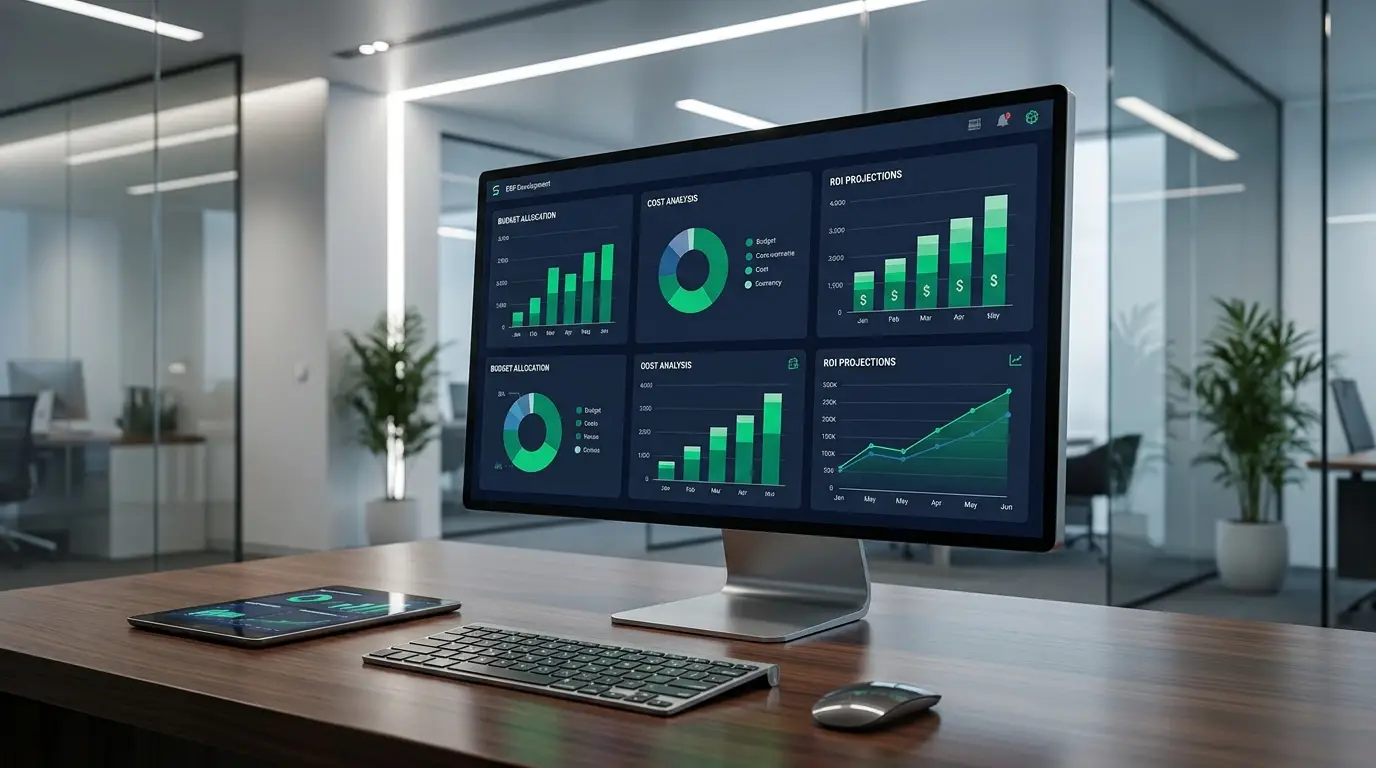
ERP Development
 By Gomilestone
 Jun 05, 2026
How Much Does Custom ERP Development Cost in India? (2026 Pricing Guide)
"How much will it cost?" is the first question every business asks about a custom ERP — and the honest answer is "it depends." That's not a dodge. An ERP for a 15-person trading company and an ERP for a multi-location manufacturer are different machines, and pricing them the same would be like quoting a scooter and a truck at one rate.
What you can get is a clear sense of the ranges, what pushes the number up or down, and how to keep your budget under control. This 2026 guide breaks all of that down for the Indian market so you can walk into vendor conversations knowing roughly what to expect.
The Short Answer: Typical Custom ERP Cost Ranges in India
Here are realistic ballpark figures for custom ERP development in India in 2026. Treat them as starting points, not quotes — your actual cost depends on the factors covered below.
- Basic / startup: 2–4 core modules, small user base, minimal integrations — ₹3,00,000 – ₹8,00,000
- Mid-size: Multiple modules, custom workflows, a few integrations — ₹8,00,000 – ₹20,00,000
- Enterprise-grade: Wide module coverage, complex integrations, high user count, advanced reporting — ₹20,00,000 – ₹50,00,000+
These figures cover design and development. Ongoing costs — hosting, maintenance, and support — are separate and covered later in this guide.
What Actually Drives the Cost of a Custom ERP?
Two ERP projects with the same headline budget can deliver wildly different systems. These are the levers that move the number.
Scope and number of modules
This is the single biggest driver. An ERP covering only inventory and invoicing costs a fraction of one that adds procurement, manufacturing, HR, payroll, CRM, and analytics. Every module is essentially its own mini-application with its own screens, logic, and testing. More modules, more cost.
Number of users and roles
A system used by 10 people with one role type is far simpler than one serving 300 people across finance, sales, warehouse, and management — each needing different permissions, dashboards, and approval flows. Role complexity adds design and development effort.
Integrations
Connecting your ERP to other systems — accounting tools, payment gateways, e-commerce platforms, logistics partners, or government portals like GST filing — adds cost. Standard integrations are quick; non-standard or legacy-system integrations take significant engineering.
Customisation and process complexity
Straightforward, common workflows are cheaper to build. Highly specific logic — multi-stage approvals, complex pricing rules, conditional automations — takes more time to design, build, and test. The more your processes deviate from the ordinary, the more custom work involved.
UI/UX design
A clean, intuitive interface isn't a luxury — poor design is the number one reason staff resist a new ERP. Thoughtful UI/UX design adds to the upfront cost but pays back in adoption and fewer support headaches.
Data migration
Moving years of existing data from spreadsheets and old systems into the new ERP — cleaning it, mapping it, and validating it — is often underestimated. The messier your current data, the more this costs.
Deployment: cloud vs on-premise
Cloud deployment via a provider keeps infrastructure costs predictable and ongoing. On-premise means buying and maintaining your own servers — higher upfront, more control. Your cloud and deployment setup affects both the build cost and your long-term running costs.
Compliance and security
Industries like finance and healthcare carry regulatory and data-protection requirements. Building in audit trails, encryption, access controls, and compliance reporting adds engineering effort but is non-negotiable in regulated sectors.
Pricing Models You'll Be Quoted
How you're billed matters as much as the total. There are three common models.
Fixed price
You agree a defined scope, timeline, and cost upfront. Best when requirements are clear and stable. Predictable, but changes mid-project mean change requests and added cost.
Time and material
You pay for actual effort (typically a day or hourly rate). Best when scope is likely to evolve or you want flexibility. More adaptable, but the final figure is less certain at the start.
Dedicated team
You engage a development team on a monthly basis that works as an extension of your business. Best for large, evolving, or long-running builds where you want ongoing capacity and direct control.
For most first-time ERP projects with reasonably clear requirements, a fixed price for the initial phase followed by a flexible arrangement for enhancements works well.
The Ongoing Costs People Forget
The build is not the end of spending. Budget for these from day one:
- Annual maintenance (AMC). Bug fixes, minor enhancements, and support typically run 15–20% of the project cost per year, or a monthly retainer.
- Hosting and infrastructure. Cloud servers, storage, and bandwidth — a recurring monthly or annual cost that scales with usage.
- Training and onboarding. Getting your team productive on the new system, sometimes including documentation and refresher sessions.
- Future upgrades. As your business grows, you'll add modules and features. Budgeting for evolution prevents the system from going stale.
A system that's well built but unsupported quietly decays. Treat ongoing cost as part of the investment, not an afterthought.
Custom Build vs Ready-Made: The Cost Trade-off
A fair question: wouldn't an off-the-shelf platform be cheaper? Sometimes — upfront. But ready-made platforms carry recurring per-user licences and add-on fees that compound every year, while a custom system you own has no licence meter running. For larger or fast-growing teams, custom often works out cheaper over a three-to-five-year horizon, and it fits your processes exactly.
We covered this trade-off in depth in our guide on custom ERP vs. ready-made ERP — worth reading alongside this if you're still weighing the two paths.
How to Keep Your ERP Cost Under Control
You have more control over the final figure than you might think.
- Start with an MVP, then expand. Build the modules that solve your most painful problems first, get them live, and add the rest in later phases. This spreads cost, delivers value sooner, and lets real usage guide what you build next.
- Prioritise ruthlessly. Separate "must-have" from "nice-to-have." Every nice-to-have you defer is budget saved for what actually matters now.
- Get requirements clear before development starts. Vague requirements cause rework, and rework is where budgets blow up. Time spent on a proper requirement analysis upfront is the cheapest money you'll spend.
- Choose the right partner, not the cheapest quote. The lowest bid often means cut corners, poor code, and expensive fixes later. A reliable partner who scopes honestly saves far more than they cost.
Cost vs ROI: The Number That Actually Matters
Focusing only on the price tag misses the point. The real question is what the ERP returns. A well-built system that saves your team hours of manual work every day, eliminates costly errors, and gives management real-time visibility pays for itself — often within the first year or two.
When we built a custom ERP for a tailoring business, the value wasn't the development cost — it was the inventory, order, and operations automation that freed the business from manual chaos. That's the lens to evaluate any ERP investment through: not "what does it cost," but "what does it save and unlock."
Frequently Asked Questions
How much does custom ERP development cost in India?
Custom ERP development in India typically ranges from ₹3,00,000 for a basic system to ₹50,00,000 or more for an enterprise-grade platform. The exact cost depends on the number of modules, users, integrations, and customisation required.
Is custom ERP cheaper than buying ready-made ERP software?
Custom ERP usually costs more upfront, but it has no recurring per-user licence fees. Over a three-to-five-year period, and for larger teams, a custom system you own can work out cheaper than an off-the-shelf subscription.
What are the ongoing costs of an ERP system?
Beyond development, expect annual maintenance (typically 15–20% of project cost), hosting and infrastructure, team training, and budget for future upgrades as your business grows.
How can I reduce my ERP development cost?
Start with an MVP covering your most critical modules, prioritise must-have features over nice-to-haves, finalise clear requirements before development begins, and choose a partner who scopes honestly rather than simply the lowest bidder.
How long does it take to build a custom ERP in India?
A focused system covering a few core modules can take a few months, while a comprehensive enterprise platform takes longer. A phased rollout lets you go live with priority modules first and add the rest over time.
Want an accurate cost estimate for your ERP?
Every business is different, and a real quote starts with understanding your processes. Talk to our ERP experts at GoMilestone for a free, no-obligation assessment and a tailored estimate.
Recent Knowledge Series


Follow Us


Have an Idea? Let's Build It Together
Transform your vision into reality with our expert development team. We're ready to bring your digital products to life.
- Free Consultation
- No Obligation Quote
- 24/7 Support

500+ Reviews

500+ Reviews
🌍 Clients Across 15+ Countries
Trusted globally by businesses worldwide