
 +44 7887081915




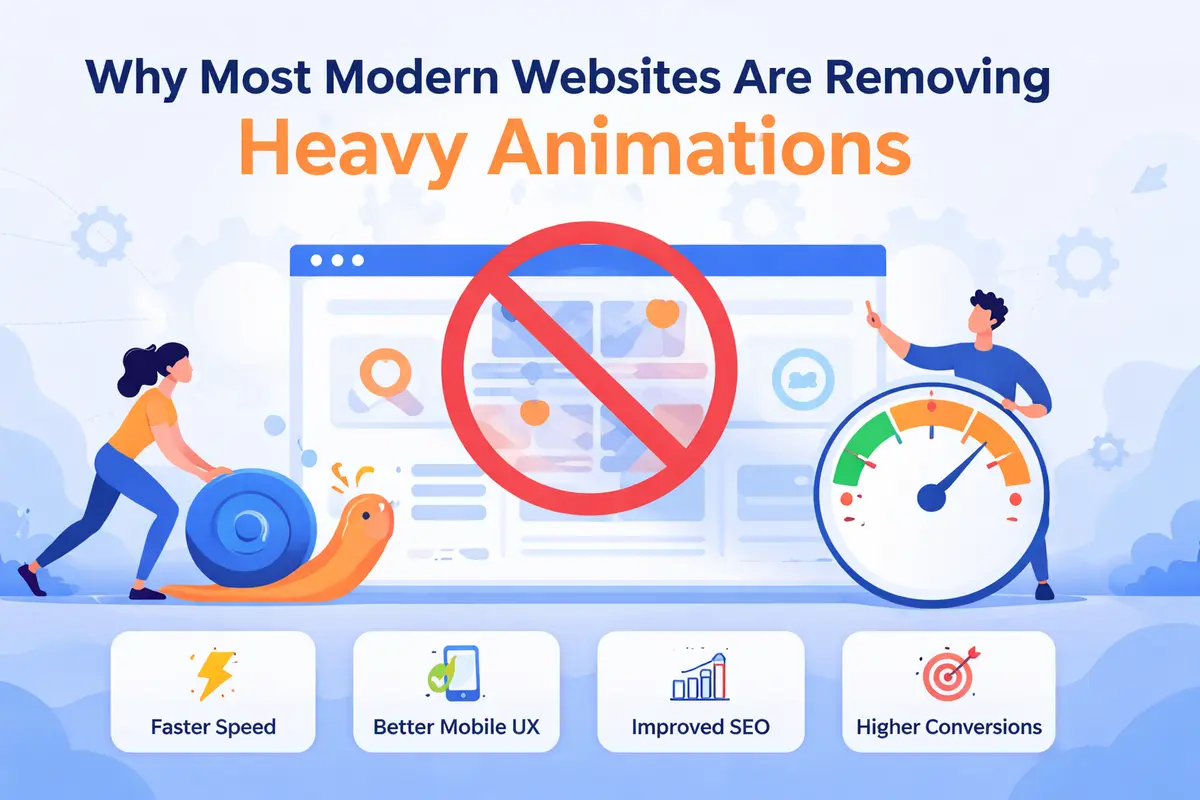
Why Most Modern Websites Are Removing Heavy Animations?
Website Development
 By Gomilestone
 Apr 18, 2026
Websites today look cleaner, faster, and more minimal compared to a few years ago. Earlier, many websites relied on heavy animations such as parallax scrolling, moving backgrounds, zoom effects, and animated text to create a premium experience.
Today, most modern websites are reducing or completely removing these heavy animations. This shift is not because animation is outdated, but because user expectations, mobile usage, performance demands, and business goals have evolved.
As a website design agency and web design agency working with startups, ecommerce brands, and enterprises, we have seen this transition happening rapidly across industries.
Speed Matters More Than Visual Effects
Modern users expect websites to load instantly. Heavy animations increase page load time because they require additional scripts, design layers, and rendering processes.
This directly impacts how quickly users can access content. Faster websites result in lower bounce rates, higher engagement, better SEO rankings, and improved conversions.
Mobile Users Dominate Website Traffic
Today, most websites receive 70% to 90% of traffic from mobile devices. Animations that perform well on desktops often struggle on smartphones.
- Laggy scrolling experience
- Screen freezing issues
- Higher battery consumption
- Reduced device performance
Because of this, modern web design follows a mobile-first approach with lightweight transitions and minimal animations.
Low Battery Mode Reduces Animation Impact
Mobile operating systems automatically reduce or disable animations when devices enter low power mode.
This means users may never actually see the animations that brands invest heavily in, making functional design more important than decorative motion.
Users Want Information, Not Distraction
User attention spans are shorter than ever. Most visitors scroll quickly, scan content, and focus on key information such as pricing and services.
Excessive animations can distract users and delay decision-making. Modern UX focuses on clarity, readability, and instant understanding.
Simpler Websites Convert Better
From a business perspective, simpler websites often outperform animation-heavy designs.
- Faster visibility of call-to-action (CTA)
- Smoother user journey
- Higher lead generation
- Improved conversion rates
Accessibility and User Comfort
Not all users respond well to motion-heavy interfaces. Excessive animation can cause discomfort such as motion sickness, eye strain, and cognitive overload.
Reducing unnecessary motion improves accessibility and ensures a better experience for all users.
SEO and Performance Benefits
Search engines prioritize fast, well-structured websites. Heavy animations can slow down page load speed and negatively impact SEO performance.
Lightweight, performance-focused design helps improve indexing, rankings, and overall visibility in search results.
Design Trends Have Evolved
Earlier Trends
- Parallax scrolling
- Motion backgrounds
- Scroll hijacking
- 3D transitions
Modern Trends
- Minimal layouts
- Clean typography
- Static hero sections
- Subtle micro-interactions
Today, simplicity is perceived as more premium and professional.
Easier Maintenance and Scalability
Animation-heavy websites require more development effort, testing, and maintenance. Simplified websites are easier to scale, update, and optimize for growing businesses.
Better Compatibility Across Devices
Not all users access websites using high-end devices or modern browsers. Heavy animations may break or perform poorly on older systems.
Minimal design ensures consistent performance across all devices and browsers.
Performance-Focused Brand Identity
Modern brands aim to communicate speed, efficiency, and professionalism. A slow, animation-heavy website can negatively impact this perception.
This is why many brands now prefer clean, performance-driven digital experiences.
Is Animation Completely Gone?
No, animation is still important—but its role has changed. Instead of heavy motion effects, websites now use micro-interactions.
Modern Micro-Interactions
- Button hover effects
- Smooth scrolling
- Menu transitions
- Form success animations
- Loading indicators
What Is Being Reduced
- Heavy parallax scrolling
- Long intro animations
- Motion backgrounds
- Scroll hijacking effects
- Complex 3D transitions
Business Impact of Performance-First Design
Brands that simplify their websites often experience measurable improvements in performance and conversions.
- Faster page load speed
- Lower bounce rates
- Higher lead generation
- Better SEO rankings
- Improved mobile engagement
Frequently Asked Questions
Why are modern websites removing heavy animations?
Modern websites are removing heavy animations to improve loading speed, mobile performance, user experience, and SEO rankings. Faster websites generally provide better engagement and conversion rates.
Do heavy animations affect website SEO?
Yes, heavy animations can slow down page speed and negatively impact Core Web Vitals, which may reduce search engine rankings and overall website visibility.
Why is mobile-first design reducing animation usage?
Most website traffic now comes from mobile devices, where heavy animations can cause laggy scrolling, battery drain, and poor user experience.
Are animations completely removed from modern web design?
No, modern websites still use lightweight micro-interactions such as hover effects, smooth scrolling, and subtle transitions to enhance usability without affecting performance.
Do simpler websites convert better?
Yes, simpler and performance-focused websites often improve lead generation, user engagement, and conversions because visitors can access information more quickly.
What type of animations are still recommended in 2026?
Modern websites mainly use subtle animations like button hover effects, menu transitions, loading indicators, and lightweight UI interactions that do not reduce performance.
Final Thoughts
Modern web design is shifting toward performance-first experiences. While animations still have value, they must be used strategically to avoid slowing down the user journey.
By focusing on speed, usability, and clarity, businesses can build websites that not only look good but also perform better, convert more users, and support long-term growth.
Recent Knowledge Series



Follow Us


Have an Idea? Let's Build It Together
Transform your vision into reality with our expert development team. We're ready to bring your digital products to life.
- Free Consultation
- No Obligation Quote
- 24/7 Support

500+ Reviews

500+ Reviews
🌍 Clients Across 15+ Countries
Trusted globally by businesses worldwide