
 +44 7887081915




How AI Is Changing Fitness Apps: From Personalised Workouts to Virtual Coaching
Fitness
 By Gomilestone
 Sep 26, 2026
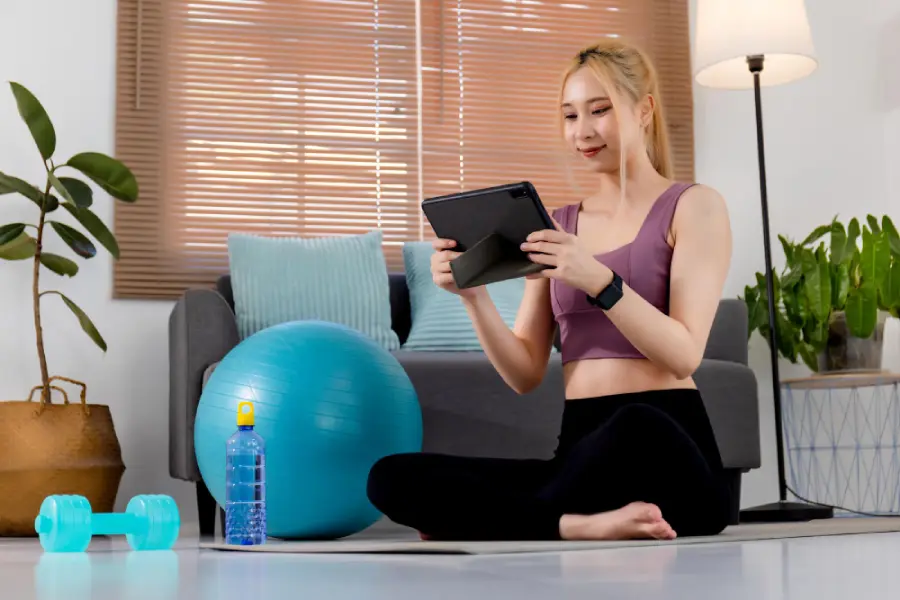
Artificial intelligence is changing fitness apps from static workout libraries into more adaptive digital coaching platforms. Instead of giving every user the same routine, AI-powered systems can use goals, workout history, preferences, available equipment and—when the user permits it—wearable or health data to generate or adjust recommendations.
Current AI fitness products use different approaches. Some rely mainly on recommendation algorithms and training data, while others add conversational AI, recovery context, voice interaction or real-time feedback. In 2026, Google has also described its Health Coach as a Gemini-powered experience designed to adapt guidance to a user's goals and health context.
The important shift is from one-time personalization to ongoing adaptation: the app can use new information from completed workouts, user feedback, schedules or supported wearable data to change what it recommends next.
What Is AI in a Fitness App?
AI in a fitness app refers to machine-learning models, recommendation systems, natural-language models, computer-vision systems or combinations of these technologies that help the app personalize, analyze or automate fitness experiences.
AI does not necessarily mean a chatbot. A workout recommendation engine, exercise-selection model, progress prediction system, conversational coach and computer-vision form analysis can all be AI-enabled components. The technology should be selected according to the specific fitness problem the application is designed to solve.
How AI Personalises Fitness Workouts
Traditional fitness apps commonly provide predefined workout programs. AI can make the program more adaptive by considering multiple inputs and adjusting recommendations as the user's circumstances change.
For example, an AI workout engine can consider a user's training goal, fitness level, previous sessions, exercise preferences, equipment availability and recent performance. If the user reports that a workout was too difficult or misses a session, the system can use that information when generating the next recommendation.
Wearable data can add another layer of context. Where users grant permission, fitness apps can use supported activity, workout, sleep or heart-rate information to inform personalized experiences. Apple HealthKit, for example, provides workout and activity data with fine-grained user authorization.
Key Ways AI Is Changing Fitness Apps
1. Personalised Workout Generation
- Workout plans based on goals and fitness level
- Exercise selection based on preferences and equipment
- Adjustable sets, repetitions or duration
- Progressive changes based on previous sessions
2. Adaptive Training Plans
- Changes based on completed workouts
- Adjustments after missed sessions
- Training-load or difficulty changes based on defined rules
- Goal-based weekly plan updates
3. Virtual Fitness Coaching
- Conversational workout guidance
- Questions about exercises and plans
- Motivation and reminders
- Natural-language explanations of recommendations
4. Real-Time Workout Assistance
- Voice prompts during workouts
- Live exercise guidance
- Rep or movement feedback where supported
- Adjustments during a workout session
5. AI-Powered Exercise Recommendations
- Suggest alternative exercises
- Adapt to available equipment
- Recommend recovery or lighter sessions based on configured signals
- Suggest progression options
6. Progress and Performance Analysis
- Identify training trends
- Summarize workout history
- Compare performance over time
- Generate understandable progress insights
7. Computer Vision and Form Analysis
- Camera-based movement analysis where supported
- Rep counting
- Pose or joint-position estimation
- Technique feedback based on the model's defined capabilities
8. Conversational Fitness Assistants
- Answer fitness-plan questions
- Explain exercises
- Help users modify schedules
- Provide natural-language summaries and guidance
AI + Wearables: A More Context-Aware Fitness Experience
Wearables can provide a stream of activity and workout measurements that can become inputs to a fitness application's recommendation layer. For example, supported heart-rate, workout, sleep or activity information can be combined with training history and user goals.
Apple's current HealthKit documentation supports workout sessions, activity summaries and workout-zone information. Apple also provides fine-grained authorization controls for health data.
The app should not automatically treat every wearable measurement as a medical fact. AI recommendations should preserve data context, account for missing or noisy measurements and clearly communicate when an output is a general fitness recommendation rather than medical advice.
AI-Powered Virtual Coaching Features
- Conversational onboarding to understand goals and preferences
- AI-generated weekly workout plans
- Workout explanations in natural language
- Exercise substitutions based on equipment or preferences
- Adaptive recommendations after completed sessions
- Voice-based coaching during supported workouts
- Progress summaries and motivational feedback
- Recovery-oriented suggestions based on configured inputs
- Reminders and habit-support messages
- Human-coach escalation or review where the product includes professional coaching
How AI Can Adapt a Workout Plan
A practical adaptive workout system can follow a feedback loop:
1. Collect Inputs
Capture goals, fitness level, exercise preferences, equipment, previous workouts and other permitted signals.
2. Evaluate the Current State
Analyze recent performance, adherence and relevant data against the user's target.
3. Generate a Recommendation
Select exercises, duration, volume, intensity or schedule based on the product's training logic.
4. Deliver the Workout
Present the plan through the app, wearable, voice interface or other supported experience.
5. Collect Feedback
Record completion, difficulty feedback, performance and other relevant user inputs.
6. Update the Next Plan
Use the new information to adjust future recommendations.
AI Fitness App Architecture
A scalable AI fitness app usually combines mobile interfaces, data services, AI/recommendation services and a secure backend rather than putting all intelligence directly inside the mobile application.
- Mobile app: onboarding, workout experience, AI coach interface and dashboards
- Wearable/health layer: supported activity and workout data with user permissions
- Backend/API: accounts, workout history, goals, subscriptions and application logic
- AI layer: recommendation engine, conversational model, prediction or computer-vision services
- Data layer: structured workout records, user preferences and permitted analytics data
- Admin/coach portal: content, workout libraries, user support and human review where required
- Monitoring layer: model performance, API health, errors, latency and usage analytics
The mobile and application architecture can be implemented through mobile app development services.
Development Process for an AI Fitness App
1. Define the AI Use Cases
Decide whether AI will generate workouts, adapt plans, provide conversation, analyze movement, summarize progress or support several of these functions.
2. Define Data Inputs
Document which user information, workout history, wearable signals and content sources the AI is allowed to use.
3. Design the Fitness Logic
Define the rules and training principles that should constrain AI recommendations. AI should operate within clearly defined product and safety boundaries.
4. Select AI Technology
Choose between recommendation models, machine learning, LLMs, computer vision or a hybrid architecture based on the use case.
5. Design the User Experience
Create onboarding, consent, AI coach conversations, workout screens, feedback flows and explanations for recommendations.
These experiences can be designed through UI/UX design services.
6. Build Mobile and Backend Systems
Develop the application, APIs, data models, authentication, workout engine and AI service integration.
7. Integrate Wearables and Health Platforms
Connect supported health APIs or devices and implement synchronization, permissions and data-quality handling.
8. Test AI Outputs
Test recommendations for consistency, relevance, unsafe suggestions, edge cases, hallucinations and unexpected user inputs.
9. Launch and Monitor
Release incrementally, monitor AI quality and user feedback, and improve prompts, models, rules and product workflows over time.
AI Fitness App Security, Privacy and Responsible AI
Fitness applications can process sensitive personal and health-related information. AI introduces additional considerations because data may be sent to model-serving systems, stored for personalization or used to generate recommendations.
- Collect only the information required for the intended AI feature
- Explain what data is used for personalization
- Use explicit permissions for health and wearable data
- Protect APIs, user accounts and model-service credentials
- Apply access controls to personal health and workout information
- Define retention and deletion policies
- Do not use health data for unrelated advertising or purposes that conflict with platform requirements
- Keep human review or escalation pathways for higher-risk use cases
- Test AI outputs for unsafe, misleading or unsupported recommendations
Apple's HealthKit privacy documentation emphasizes fine-grained user authorization and limits the use of HealthKit data for advertising and similar services.
For fitness applications that handle health-related data or healthcare-related workflows, healthcare software development can support the required application architecture and data considerations.
How Much Does It Cost to Develop an AI Fitness App?
AI can increase fitness app development cost because the project may require recommendation logic, model or API integration, data pipelines, wearable integrations, additional testing, cloud infrastructure and ongoing AI monitoring.
The exact budget depends on whether the AI is rule-based, predictive, conversational, computer-vision based or a combination.
Basic AI Fitness App
Indicative planning range: ₹8–15 lakh+
Typical scope: Workout plans, basic personalization, AI/API integration and core fitness tracking.
Mid-Level AI Fitness App
Indicative planning range: ₹15–30 lakh+
Typical scope: Adaptive plans, wearable/health integration, conversational AI, backend and analytics.
Advanced AI Fitness Platform
Indicative planning range: ₹30–60 lakh+
Typical scope: Multi-platform AI, virtual coaching, real-time features, computer vision, wearables, advanced analytics and scalable infrastructure.
These are indicative planning ranges, not a GoMilestone quotation. A final estimate should be based on the AI use cases, number of platforms, data sources, wearable integrations, backend scope, model/API costs, security requirements and ongoing maintenance.
Factors That Affect AI Fitness App Development Cost
- Number and complexity of AI features
- LLM or third-party AI API usage
- Custom machine-learning model development
- Computer-vision or pose-estimation requirements
- Wearable and health-platform integrations
- Data collection, cleaning and labeling requirements
- Real-time AI processing and voice features
- Backend infrastructure and cloud compute
- Analytics and personalization requirements
- Security, privacy and compliance requirements
- Model evaluation, monitoring and ongoing optimization
Common Challenges When Adding AI to Fitness Apps
- Poor-quality or incomplete user data can produce weak recommendations
- AI-generated plans may not consistently follow the product's intended training logic
- LLMs can produce confident but unsupported answers if not constrained
- Wearable data can be missing, delayed or inconsistent between devices
- Computer-vision feedback depends on camera position, lighting and model limitations
- AI API costs can increase with usage
- Real-time coaching requires low latency and reliable connectivity
- Privacy requirements become more complex when personal health data enters AI workflows
AI vs Traditional Fitness App: What Changes?
Workout Plans
Traditional fitness apps use predefined programs, while AI-enabled fitness apps can generate or adapt plans.
Personalization
Traditional fitness apps commonly use questionnaires and manual settings, while AI-enabled apps can incorporate ongoing data and feedback.
Coaching
Traditional fitness apps provide static instructions or content, while AI-enabled apps can provide conversational and adaptive guidance.
Progress Analysis
Traditional fitness apps use charts and fixed metrics, while AI-enabled apps can provide automated summaries and pattern-based insights.
Exercise Selection
Traditional fitness apps allow users to choose from a library, while AI-enabled apps can suggest or substitute exercises.
User Interaction
Traditional fitness apps are mostly screen-based, while AI-enabled apps can include conversational or voice interaction.
Data Use
Traditional fitness apps mainly track and display data, while AI-enabled apps can use data to influence recommendations.
How GoMilestone Can Help With AI Fitness App Development
GoMilestone can support fitness and health application projects across mobile app development, custom software development, healthcare software development, cloud infrastructure and UI/UX. For an AI-enabled fitness product, the project can be structured around the target AI use cases, fitness workflows, supported health data, wearable integrations and a phased product roadmap.
Relevant capabilities include fitness app development services, mobile app development, custom software development, healthcare software development, cloud and DevOps solutions and UI/UX design services.
A custom software development approach can support custom AI fitness platforms, integrations, workflows and specialized functionality.
AI backend, APIs, deployment and scalability can also be supported through cloud and DevOps solutions.
Conclusion
AI is changing fitness apps by making workout experiences more adaptive, interactive and personalized. Instead of relying only on fixed workout libraries, modern fitness platforms can combine user goals, training history, wearable information and feedback to generate or adjust recommendations.
The strongest AI fitness products are not defined simply by having a chatbot. Their value comes from using the right data, applying clear fitness logic, providing useful recommendations and continuously improving the experience while protecting user privacy. Virtual coaching, adaptive workouts, progress analysis, wearable-informed recommendations and real-time assistance can all become part of a broader AI fitness ecosystem.
If you are planning an AI-powered fitness product, fitness app development services can help structure the application around its AI use cases, fitness workflows and product requirements.
Frequently Asked Questions
How is AI used in fitness apps?
AI can be used for personalised workout generation, adaptive training plans, exercise recommendations, progress analysis, conversational coaching, voice guidance and computer-vision-based movement analysis.
Can AI create personalised workout plans?
Yes. An AI or recommendation system can generate or adapt plans using inputs such as fitness goals, experience, workout history, equipment and other permitted information.
Can AI fitness apps use wearable data?
Yes. With appropriate user permissions and supported platform integrations, fitness apps can use wearable and health-platform data as inputs for tracking and personalization. Apple HealthKit provides fine-grained authorization for supported health data.
What is an AI virtual fitness coach?
An AI virtual fitness coach is a software-based coaching experience that can provide workout guidance, answer questions, adapt recommendations and communicate with users through text, voice or other interfaces.
How much does it cost to develop an AI fitness app?
A basic AI fitness app may start around ₹8–15 lakh+, a mid-level platform may fall around ₹15–30 lakh+, and an advanced AI fitness platform may reach ₹30–60 lakh+ or more. Actual cost depends on AI complexity, integrations, backend, platforms and security requirements.
How long does it take to build an AI fitness app?
A basic AI fitness product can take a few months, while an advanced platform involving wearables, adaptive training, conversational AI, computer vision and real-time features can take considerably longer.
Can AI provide real-time workout coaching?
Yes. Depending on the architecture, real-time coaching can use voice prompts, workout-session data, conversational interfaces or computer-vision feedback. The exact capability depends on the device, model and product design.
Is AI fitness coaching the same as medical advice?
No. A general fitness recommendation system should not automatically be presented as a medical diagnostic or treatment system. Products that address medical or higher-risk use cases require additional clinical, regulatory and safety considerations.
Recent Knowledge Series

Follow Us


Have an Idea? Let's Build It Together
Transform your vision into reality with our expert development team. We're ready to bring your digital products to life.
- Free Consultation
- No Obligation Quote
- 24/7 Support


🌍 Clients Across 15+ Countries
Trusted globally by businesses worldwide